Monday, 4 February 2008

Lighter mornings

Imperceptible but oh so welcome the dawn is creeping backwards, here in Shropshire daffodils are out, snowdrops fading and new buds on the honeysuckle.

It is a wonderful world when you have time to stop and look, it's just a pain having to rush around trying to make a living. Or to listen to the news of countries tearing themselves apart, suicide bombers and economic collapse, and

The profligate spending of the rich and vacuous ‘celebrities’ . You can’t help thinking that there has to be reckoning for the human race all six billion and rising. Tom Lehrer wrote a song in sixties about the bomb when we would all go together and fry all 3 billion of us. In forty years the population of the world has doubled, if that’s exponential growth.

How long before nature/Gaia/the planet shrugs its shoulders and says enough of this disgusting two legged parasite that fouls and spoils this beautiful earth.

When I sailed across the oceans in the sixties there were whales, flying fish, sharks and turtles, when sailed across from The Canaries to the West Indies and New York to Falmouth in the nineties, there was plastic, polystyrene and other detritus and no sign of marine life.

The Mediterranean is a sewer the coral around beautiful islands is bleached white and dead Don Henly got it right when he sang, ‘Call somewhere paradise kiss it goodbye’.


Pandemic, or super volcano, climate change or maybe a rogue rock I figure there will an 'adjustment', and make no mistake about it, we are to blame

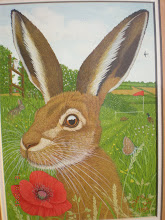
Stained Glass

The means of creating stained glass was

itself a kind of miracle needing the skills

of both alchemist and artist. The tool

for cutting the glass for example, had

to be cooled in ‘the urine of a three-year-old

goat fed only on ferns or, if that was really

unavailable, the urine of a small red-headed-boy’.

Here stand the complexities of the 16th century mind.

The Kings Glass – A Story of Tudor Power

and Secret Art by Caroline Hicks Chatto £18.99

Sustainability Blog: Recycling and Global Warming

Sustainability Blog: Recycling and Global Warming

Monday, 14 January 2008

Obscurity and Yevtushenko

Just reading a book written about 1700 called a History of Myddle, a village near us. I love the phraseology and these things could happen to any of us eg:
He died soon after he went to Shrewsbury, and as his life was extravagant so his end was strange, for as he sat in an alehouse cellar upon the stands that holds the barrels, and whilst another was drawing drink by him, he was taken with an apoplexy and fell down dead . . .
. . . This Richard Wycherley never married, and therefore he adopted Richard Wycherley (son of his brother Thomas Wycherley of Cockshutt) to be his heir, and put him to school to Mr Suger of Broughton, at what time I was a scholar there. He was very dull at learning, which caused Mr Suger to say very often he had no guts in his brains, but it seems he had gear in his breeches, for he got one of his uncle's servant maids with child, and thereupon his uncle sent him to London and bound him an apprentice there to a person that used some small trade about stuff and jerseys. Before his time was fully expired he married his maid .
The thought of all those lives lived in obscurity, but hey that does not mean obscurity is uninteresting. Yevteshenko wrote, (I'll have to translate from the Russian!).

No people are uninteresting.
Their fate is like the chronicle of planets

Nothing in them is not particular,
and planet is dissimilar from planet

And If a man live in obscurity
making his friends in that obscurity
Obscurity is not uninteresting.

To each his world is private,
and in that world one excellent minute.

And in that world one tragic minute.
These are private.

In any man who dies there dies with him
His first snow and first kiss and fight.
It goes with him.

They are left books and bridges
And painted canvas and machinery.

Whose fate it is to survive.
But what has gone is also not nothing:

By the rule of the game something has gone.
Not people die but worlds die in them.

Whom we knew as faulty, the earth’s creatures.
Of whom, essentially, what did we know?

Brother of a brother? Friend of friends?
Lover of lover?

We who knew our fathers
In everything, in nothing.

They perish. They cannot be brought back.
The secret worlds are not regenerated.

And time again and again
I make my lament against destruction.

Yevtushenko

Ogden Nash

I would live all my life in nonchalance and insouciance, Were it not for making a living, which is rather a nouciance. Ogden Nash

Returned and unwanted mail

FOR ELEVEN YEARS WE HAVE PROCESSED RETURNED MAIL FOR CREDIT CARD COMPANIES

By doing so we
Reduce the environmental impact
We scan and capture the address
Pulp and recycle the redundant paper/envelopes

Making paper from recycled materials results
in 74% less air pollution and 35% less water pollution

COST BENEFIT ILLUSTRATION…
Annual mailing volumes 4 million packs @50p = £2,000,000 cost
@ return rate of 5%
200,000 packs undelivered @50p = £100,000 wasted
Veridata data capture of 200,000 packs @10p = £20,000 cost
GENERATES A SAVING OF £80,000 for your business by NOT re-mailing the same 200,000 addresses!


tim.craig@veri-data.co.uk Chester CH1 1RD

Oil and There Will Be Blood

There Will Be Blood based on the novel 'OIL' by Upton Sinclair and starring Danie DayLewis

the best film in a decade.